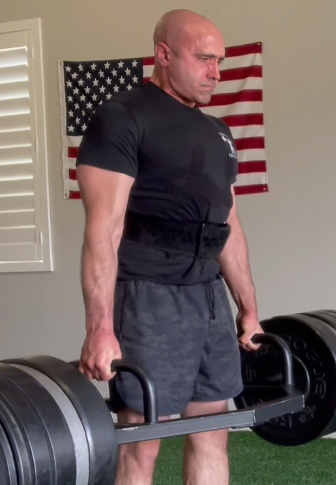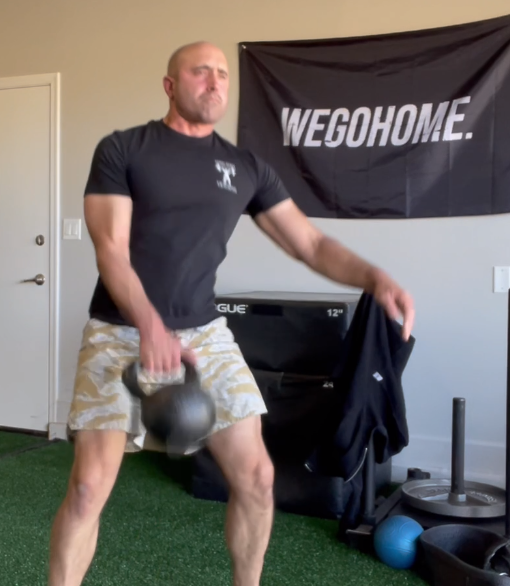

If/When First Responders should specialize in their strength and conditioning training.
Key Takeaway
Our first article discussed the different phases of the training cycle that were discussed in the book I’ve recently been reading, Special Strength Development For All Sports, by Louie Simmons. On Chapter 6, page 89, Louie goes into the textbook training periods for an athlete: Accumulation, Intensification, Transformation, and then Delayed Transformation.
Our second article talked about accumulation, or the training phase where we essentially do the most volume, with the overall goal of raising our capacity. We also don’t spend too much time specializing in anything. I argue we should be training capacities, not necessarily specific lifts and spending most of our time training our aerobic system in varying intensities.
This article will discuss Intensification, or the phase of training where we start to drop some of that extra volume or movements and start to specialize a bit on tasks we want to focus on. Read or listen more for why you might want to do that if you are cop, firefighter, or “Tactical” individual.
Intensification- Why?
Intensification is the phase of training where if you were an athlete, powerlifter, Olympic weightlifter etc. you would start to remove some of the nonspecific work you’ve been doing to concentrate on whatever your task is for competition. By dropping the extra work you make room to push up exercises and/or conditioning that is more specific to the event. You can’t do this for too long. If you spend too much time being too specific for something you’ll inevitably back track with overuse injuries and burnout. As old school strength coach Dan John says:
“Specialization works. But at a price.”
Louie Simmons also talked about this constantly in his writings, citing the phenomenon known as accommodation, or what happens if you constantly stress an athlete too long with the same stimulus. They inevitably back track and burnout. You have to change things up, but not just to change them…have a real reason behind the change to ensure it is productive and builds off whatever the last method you were using. This is why our Human Performance Training Team has yearly long term training cycle.
However, a fair question you should be asking now is, “why would a Tactical or First Responder want to do this since they don’t have a specific athletic event?”
It could be a few reasons. You may want to test yourself. You have always wanted to hit a particular run time or weight for a specific lift. To accomplish that, maybe you bring down some volume to more of a maintenance level for certain movements/conditioning and you start to hammer those other qualities for a few weeks. You don’t have to abandon everything, but you can just specialize a bit.
Another reason could be you have a physical fitness test of some sort coming up. Maybe you spend more time doing lifts and accessories that you know help with whatever your event is for a few weeks. Often just a bit of specialization and a small taper before the event is all you’ll need to hit a high performance metric on the test. Especially if you’ve been training.
Along the same lines, if you’re getting ready to attend a SWAT or Military selection/school this is something at some point you would want to employ. If you have a hard date for either of these events when you’re several months out you should be training in very general ways building up your overall base of fitness (Accumulation) before specializing for the event you’re heading to (specialization).
Closing
Understanding these different training phases is crucial for not just the individuals who are in these professions, but also for the people planning their training. Academy instructors should at least have a general understanding on how these phases work. Yes, the candidates have to prove they’re worthy to continue employment with you. You also have to best serve your trainees and train them optimally.
Who knows, you might just instill a workable training program that they could use once they’re out on the street to maintain their fitness.
Next article we will discuss the last two training phases:
Transformation, and then Delayed Transformation.
Stay Safe.