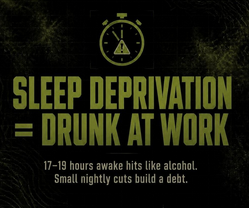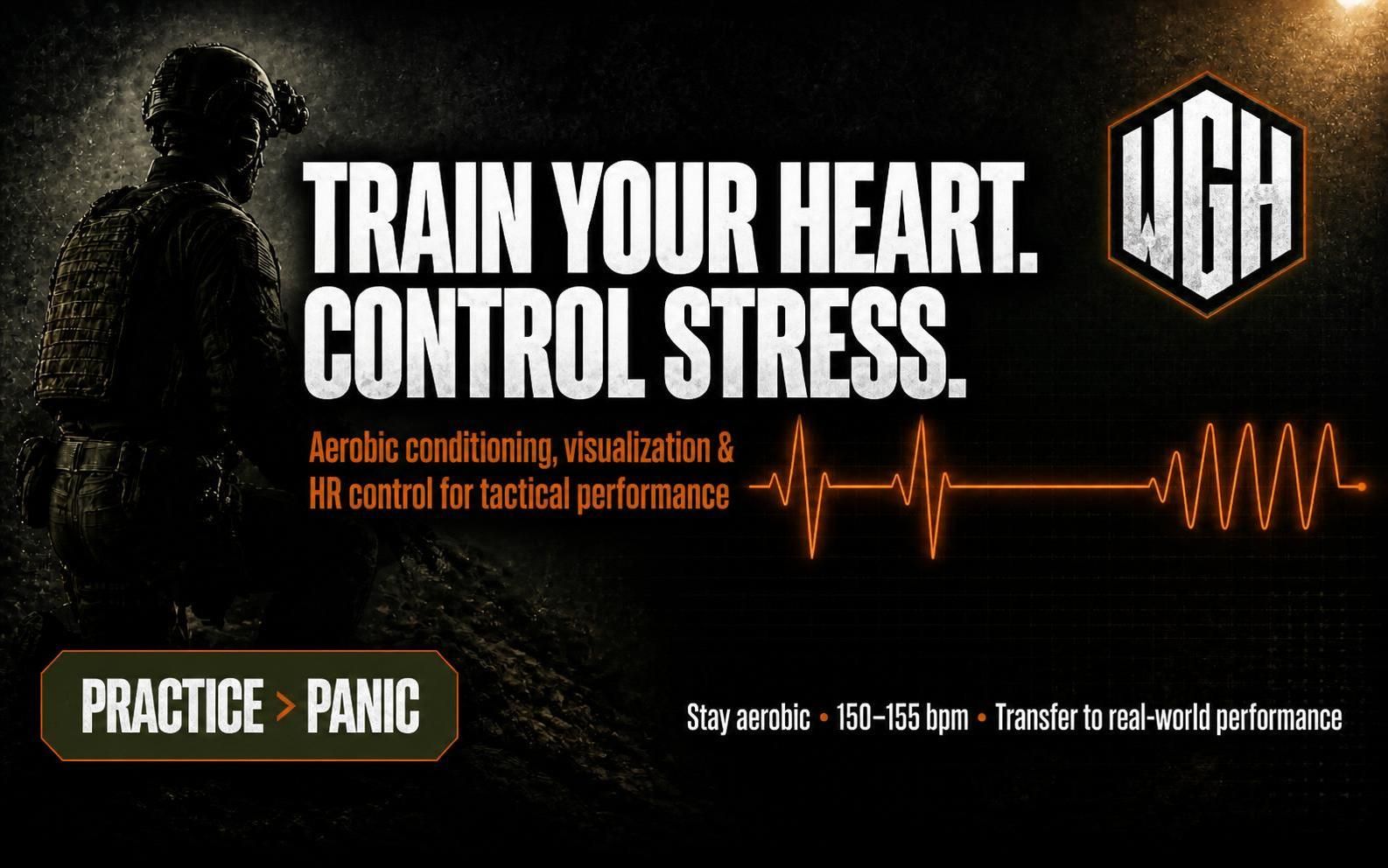

The perfect training day is a myth. Shift work, erratic hours, and stress demand programming that works with your physiology and schedule, not against it.
Key Take Away- Training When You’re Not at Your Best
Fitness trackers shouldn’t be your only guide—especially in professions where you can’t schedule when you need to perform. First responders and tactical operators face unpredictable demands that don’t wait for a green light on your readiness score. The reality is simple: if you relied solely on biometric data, you’d probably skip too many training sessions given the nature of these jobs.
That said, common sense still applies. If you’re severely sleep-deprived from being held over on a shift, taking the day off to rest before your evening shift makes sense. And if you’re completely run down, that’s not the time to max out a lift just because it’s on the schedule. The goal is optimal training, not perfect training—and those are very different things.
Why “Perfect” Doesn’t Exist in the Real World
A Division I football strength coach once shared something that stuck with me: the training process is inherently imperfect. Some nights you don’t sleep well for reasons you can’t explain. On certain training days, the bar feels heavier than it should, or you just know you’re “off.” But here’s the thing—when game day arrives, these athletes don’t get to postpone. They still have to play.
The same applies to law enforcement and tactical work. You can’t schedule when a foot pursuit from a traffic stop is going to happen. You can’t call in advance to arrange a structure fire or a barricaded subject call-out. That football strength coach understood this concept and he realized that his athletes sometimes needed to be able to perform at 80-90% readiness, and more importantly, he trained them to be comfortable performing at that level.
Why aren’t we applying that same mentality to first responder and tactical training?
Smart Ways to Train When You’re Tired
The key distinction: training tired doesn’t mean crushing yourself in the weight room. Here are two practical approaches.
Loaded (BUT LIGHT) Aerobic Work
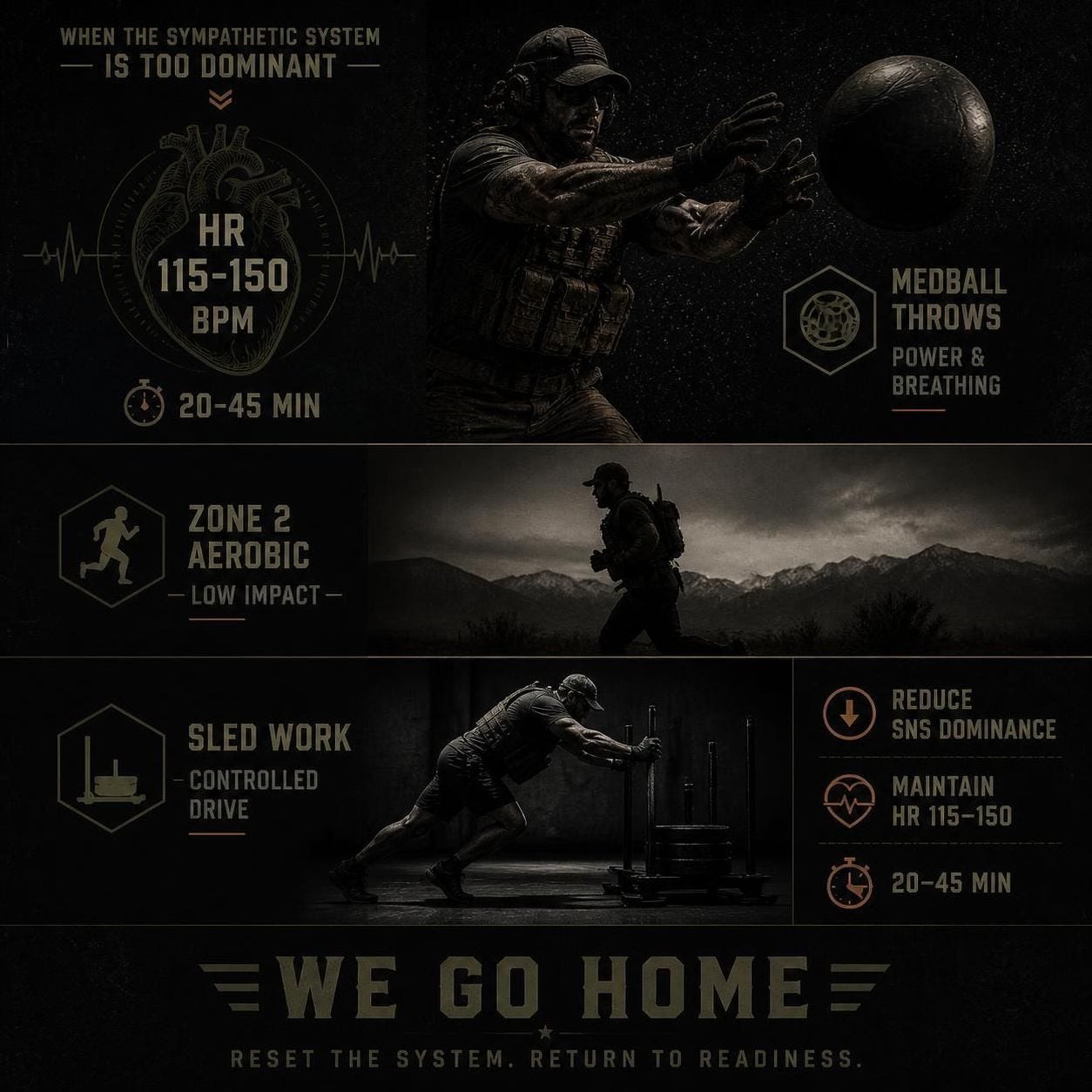
Simple and effective. You get some loaded aerobic work, it’s mostly concentric-focused (less soreness afterward), and you can do it at a steady pace or even intervals. Some of this can even be ballistic focused like with medball throws or banded movements. Box Jumps can be work too.
Sessions like this build work capacity and encourage recovery. Reserve your complete rest days for once or twice a week, or in extreme cases like severe sleep deprivation.
Louie Simmons called these “small workouts” in his book Special Strength Development for All Sports—and they’re one of the best tools for helping your nervous system recover and come back to baseline (or even above it).
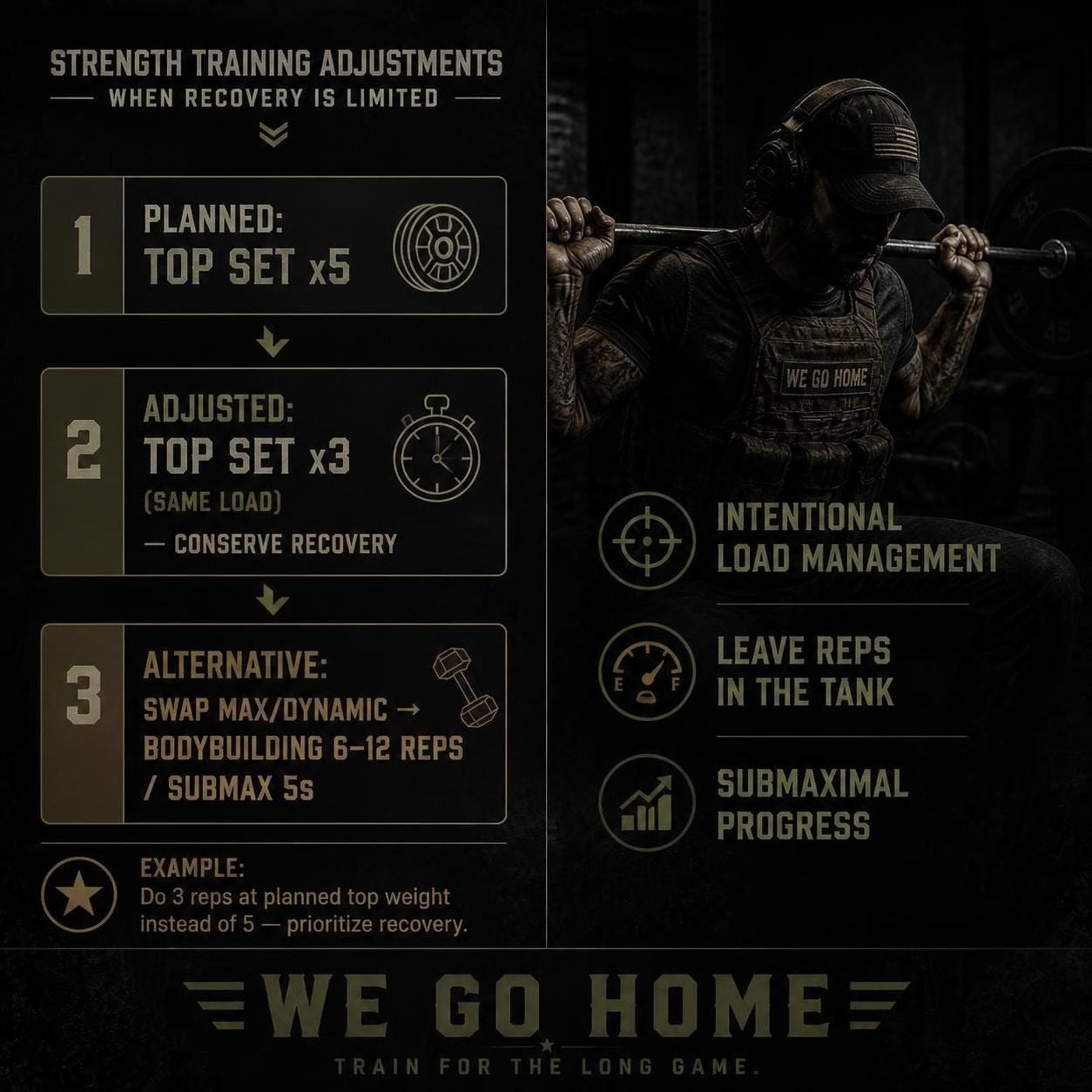
Modified Strength Sessions
If you have a strength session planned, scale back the weight. There are specific recommendations below in the diagram. With these modifications, you still get work in, just not the heaviest loads you intended. Your nervous system gets a break. Unless you stack more fatigue on top of it, you’ll almost certainly come back stronger the next week.
The Psychological Edge of Training Tired
There’s real value in training while fatigued—within reason. As stated earlier cops or firefighters can’t determine where their shift takes them. This is where showing up and doing some work, even when fatigued, builds something science alone can’t measure: mental toughness.
Here’s what matters: I’m talking about regular fatigue, not injury, not a week of accumulated poor workouts, and certainly not chronic sleep deprivation. When you have a bit of fatigue and put the science aside to get a solid workout in, you’re training your mind as much as your body. For some people, this also builds discipline if they’ve been inconsistent.
The Bottom Line
Michael Jordan’s famous Game 5 performance in the 1997 NBA Finals—fever, chills, exhaustion- and still scored 38 points—reminds us that competition doesn’t care about your readiness metrics. But here’s the crucial difference: in sports, the stakes are financial pressure. In first responder and tactical work, people’s lives are on the line.
Your job is chaotic and unpredictable. You’re rarely perfectly rested like an athlete at a training facility. That’s just the reality of the profession. This is why in our We Go Home Human Performance Daily Team Training Program, our SWAT Selection program, and our generic Special Operations Program we build in a sensible training week that allows for recovery between higher intensity sessions.
However, no program can account for everyone’s unique schedule, stress levels, and recovery patterns. Sometimes you have to modify things to fit your actual situation—drop intensity on rough days, or shift rest and active recovery days around to meet where you are in your training week. If you do train with us I am always just an email or a message away on the TrainHeroic App.
The real question isn’t whether you can train when everything is perfect. It’s whether you can perform when the moment demands it—because that moment won’t wait for ideal conditions.
Train like it.
References
Simmons, L. (2015). Special strength development for all sports. Westside Barbell.