
Recovery has become its own industry.
Cold plunges. Red light. Massage guns. Wearables. “Biohacking” routines that look impressive on social media.
And while some of those tools can help…
Most people are using them to compensate for something much simpler:
they’re skipping the foundational layers of recovery.
That’s why they still feel sore, flat, sluggish, or under-recovered — even when they’re “doing all the recovery stuff.”
So let’s make this simple.
Recovery works best when you treat it like a pyramid — not a checklist.
Because the top of the pyramid only works if the base is in place.
 The Problem: Recovery Has Been Turned Into a Shortcut Culture
A lot of athletes today don’t want to recover.
They want to “hack” recovery.
They’re searching for something that lets them:
- train harder
- sleep less
- stress more
- eat worse
- and still feel good
But recovery doesn’t work like that.
Recovery isn’t a trick. It’s a system.
And the system has an order.

The Recovery Pyramid
Here’s the truth most people ignore:
The biggest drivers of recovery aren’t trendy.
They’re boring.
They’re consistent.
And they compound.
Each layer of the pyramid builds the next.
If you’re missing layers 1–3, layer 5 doesn’t matter.

Layer 1: Sleep Quality (Not Just Hours)
This is the foundation — and it’s not negotiable.
Sleep is where:
- muscle repair accelerates
- nervous system stress comes down
- hormones normalize
- inflammation gets regulated
- memory, cognition, and mood reset
- Most athletes aren’t “bad at sleep.”
They’re just overstimulated at night.
Signs you’re missing this layer:
- you wake up tired even after 7–8 hours
- you can’t fully shut your brain off at night
- you rely on caffeine to feel normal
- soreness sticks around longer than it should
Sleep isn’t a passive activity. It’s an active recovery window.
That’s where products like Zero Dark Thirty fit intelligently:
not as a shortcut, but as support for the systems that matter most —
helping your body downshift, calm the nervous system, and improve depth and quality of sleep.
Because if your sleep is shallow, your recovery is capped no matter what else you do.
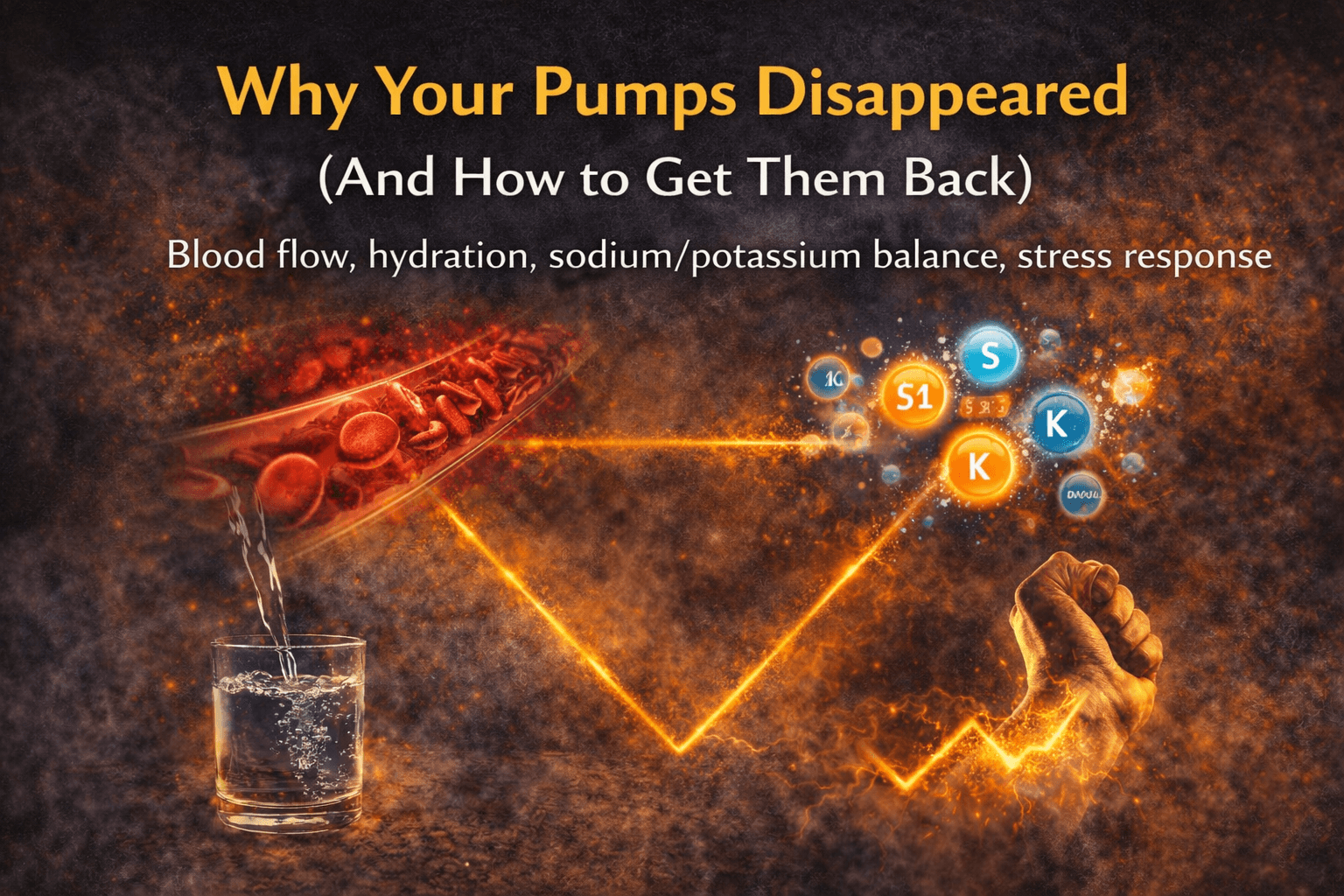
Layer 2: Hydration + Minerals
Most athletes underestimate how much recovery depends on hydration.
Hydration affects:
- muscle contraction
- blood flow
- nutrient delivery
- inflammation
- soreness
- energy output
But hydration isn’t just “drink more water.”
It’s water plus minerals.
If minerals are low, you can drink plenty and still feel:
- flat
- tight
- crampy
- foggy
- underpowered
This is why endurance athletes obsess over Electrolytes —
but lifters often ignore them until performance dips.
Hydration isn’t sexy.
But it’s one of the biggest “invisible” recovery multipliers.

Layer 3: Digestion + Nutrient Utilization
This is the layer everyone skips.
You can eat clean.
Hit macros.
Even take great supplements.
But if digestion is weak, you’re leaving recovery on the table.
Because recovery requires absorption.
If your gut is off, you’ll notice:
- bloating after meals
- inconsistent energy
- sluggishness
- inflammation
- weakened immune resilience
-
weird food sensitivity
This is why gut support has become a major performance lever.
It’s not about “being healthy.”
It’s about how efficiently your body uses what you give it.
That’s where Tropical Storm fits naturally into the pyramid:
a daily greens + reds formula built to support micronutrients,
digestion, and internal readiness.
Because recovery isn’t only about your muscles.
It’s about how your whole system functions.

Layer 4: Inflammation + Immune Resilience
Most people associate recovery with soreness.
But soreness is only one signal.
The deeper recovery challenge is systemic inflammation —
especially when stress, training load, sleep disruption, and life pressure stack up.
A body stuck in inflammation doesn’t rebuild well.
That shows up as:
- soreness lasting too long
- low motivation
- recurring fatigue
- slow progress
- “I’m not sick, but I don’t feel great”
This is where Colostrum becomes a high-impact foundational tool.
Colostrum is often used to support:
- gut lining integrity
- immune system resilience
- inflammatory balance
- digestive recovery
In other words:
your body’s ability to handle stress and rebuild.
And when recovery improves internally, performance improves externally.
Layer 5: The Extras (Cold Plunge, Sauna, Massage, Gadgets)
This is where most people start.
But it should be the last layer.
These tools can help with:
- soreness perception
- blood flow
- relaxation
- general recovery feel
But they won’t fix:
- shallow sleep
- dehydration
- poor digestion
- chronic stress
They’re not useless.
They’re just not foundational.
Use them once the base is built.

The Real Key: Recovery Isn’t a Habit — It’s a Standard
Recovery isn’t what you do when you’re broken.
It’s what you do so you don’t break.
The best athletes don’t recover harder than everyone else.
They recover smarter — with priority and structure.
If you want better output, you don’t need 10 new “hacks.”
You need the pyramid.
How to Apply This Immediately
If you’re feeling under-recovered right now, here’s the simplest reset:
✅ Start with sleep quality (Layer 1)
✅ Rebuild hydration + minerals (Layer 2)
✅ Support digestion + micronutrients daily (Layer 3)
✅ Strengthen immune & inflammation resilience (Layer 4)
✅ Use recovery tools as add-ons, not the foundation (Layer 5)
That’s it.
No gimmicks.
Just the standard.
Final Thought
If your recovery isn’t improving, the answer isn’t always “try harder.”
Sometimes it’s:
go lower in the pyramid.
Because the base moves the needle — and everything else is just decoration.