
Real Preparedness
If you knew, as a cop, firefighter, SWAT officer, or other tactical professional, that the hardest and most demanding call of your life was tomorrow, what would your workout be today?
I would tell you that if you’re already motivated, have trained your entire life, and have built a solid foundation of fitness, your workout should, at best, be active recovery. Complement that session with clean food, hydration, and a good night’s sleep. If you knew farther out, you would structure your week accordingly for recovery and performance.
This is common sense. You wouldn’t crush yourself the day before an event like this any more than an NFL player would before game day.
When I think back to the brief period when I was a graduate assistant strength coach, I remember seeing the yearly plan repeated for Division I football players.
Summer preseason
Longer training block: a full week of strength, conditioning, power, agility, and more, with skill practice in the afternoon.
In season
Weight-room and dedicated conditioning sessions are limited—especially for athletes seeing the field. Practice and game readiness are the priority. Players who do not play continue training hard.
Spring ball
A shorter training block: lifting three times per week, conditioning on other days, and skill practice. This serves as a buildup to spring training and an opportunity for players to prove where they could fit the following season.
Notice something here: the athletes’ training complements where they are in the competitive season.
For some reason, in the tactical and first-responder realm, we tend to have people who do nothing and are in poor shape—or people who think every session is supposed to be a puke-inducing beating comparable to being thrown down a flight of stairs… for time.
This article series will explore what firefighters, cops, and everyone in between can learn from this training process.
Yearly Training Process: What Is Your “Season?”
When you look at Division I football players, overwhelmingly, you’re looking at some of the best genetic potential in the U.S. I never forgot my first day of summer training, when I watched a half-asleep football player perform a backflip on a whim at 7:00 a.m., with no warm-up.
Humbling, to say the least.
I bring up that story because, despite this being such a gifted population, they still had only roughly four structured training days in the offseason. Yes, they did a lot, but that was their job. Maybe they took summer classes, but their main focus was getting sleep, eating the food they were provided, and showing up to train.
Compare that with the average shift-work cop on nights: sleeping when the sun is up, dealing with various stressors, preparing their own food, ideally training in some form of combat sport, and facing physical requirements they are responsible for building and maintaining.
The Irony: When More Work Produces Less Progress
And yet, we still seem to fall into two camps in these professions. We either have people who do nothing and live sedentary lifestyles—and it is a miracle they survive every shift—or we have people who are so motivated that they constantly crush themselves in the gym without tracking long-term progress.
To be honest, I often fell into the latter category. I trained a ton when I had free time and felt guilty if I didn’t, but I ignored where I was by the end of a training cycle. My lifts did not budge, or I tweaked a hamstring—but at least I worked hard.
Ironically, I usually made the best progress when I was too busy at work to add more training—training that was really about satisfying my emotions rather than producing real results.
Main Takeaway
If the best athletes in the country—many barely 20 years old—must manage training stress so they can perform in a structured contact-sport environment, shouldn’t you?
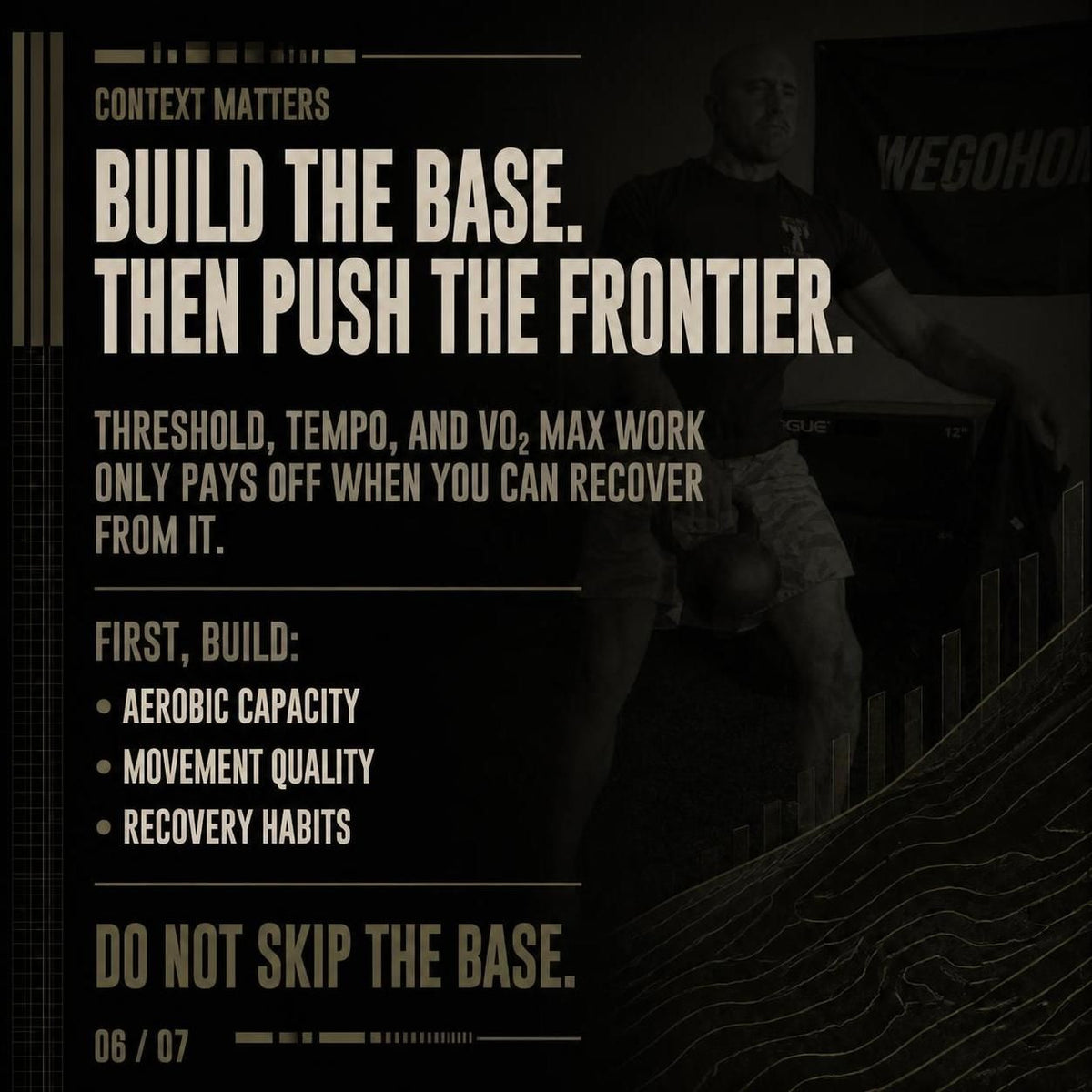
If you want to get stronger, better conditioned, improve your grappling, boxing, or other skills, and still perform on the street when called upon, you must measure results, recover from training, and repeat that process for your entire career.
Your methods, tools, volume, frequency, and everything in between will change as you mature. But one of the biggest mistakes you can make is judging training solely by how tired you feel after each session.
Fatigue is often a byproduct of productive training. It is not, however, the goal.
Different phases should include periods of higher volume or intensity and emphasize particular goals while maintaining others. The point is to manage stress deliberately so your training improves performance rather than competes with it.
That is real training.
Future articles will break down this process further and show how principles used with some of the country’s most gifted athletes can apply to SWAT, SOF, cops, firefighters, and other tactical professionals.