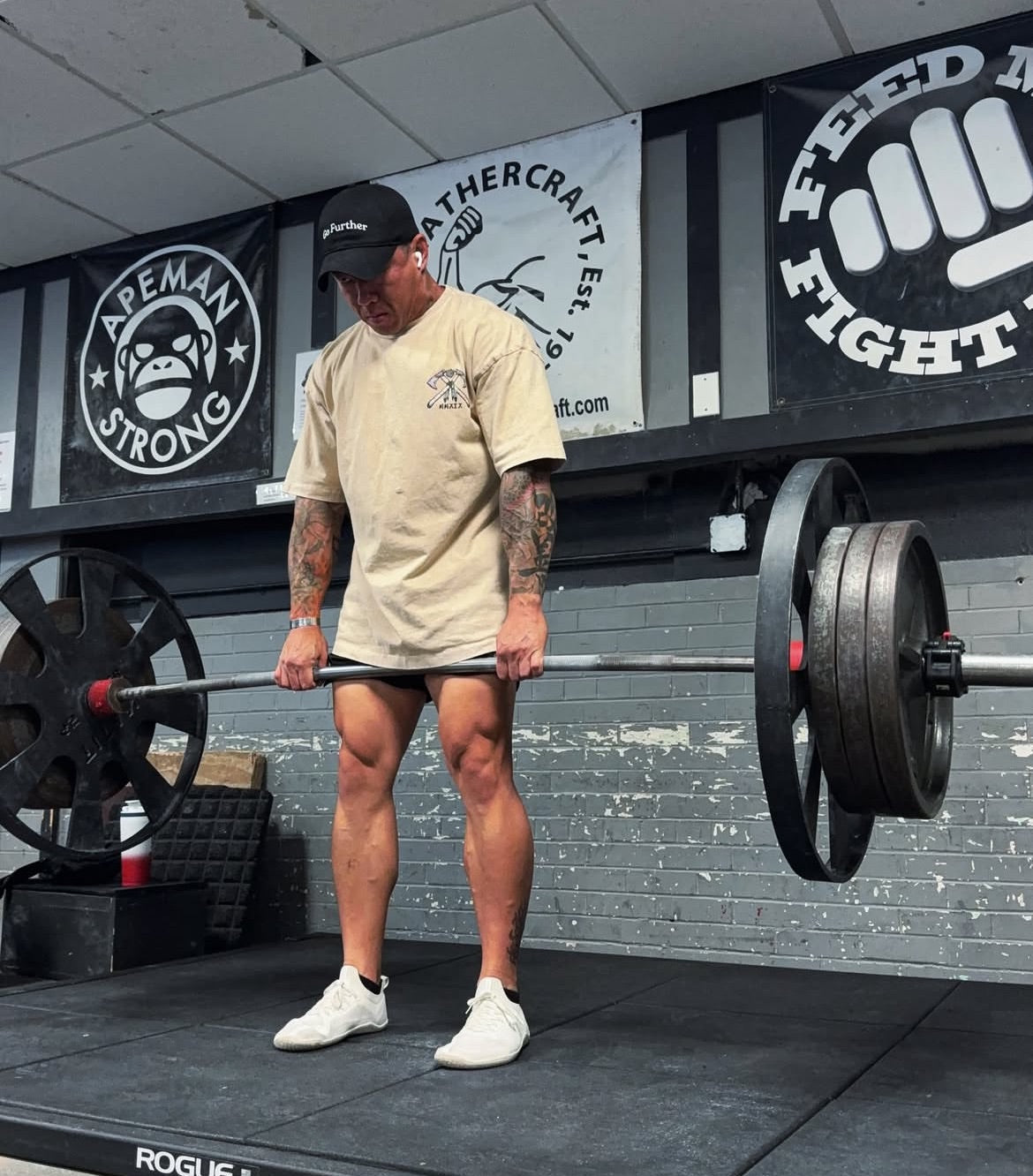

First Responders and Tactical Populations don't have to necessarily hit a one rep max to measure strength.
Key Takeaway
When training First Responders and Tactical Populations it is valuable to know how much weight they can lift on a few key exercises. This is important mainly to measure progress, but also as we get to more intermediate/advanced levels of strength we may use some level of percentage based training, particularly for speed or power work.
But do we need to truly test them for the heaviest weight possible that they can lift for one repetition? I would argue no. We can get a close enough approximate weight through a projected max chart.
Projected Max Chart
For those of you that don’t know what a projected max is or the charts commonly used by strength and conditioning coaches, it is a formula that helps estimate a one rep max based off the weight lifted and the number of repetitions achieved. Some of these formulas are complex while others are simple.
An example would be a trainee lifts 300lbs on a given exercise.
Below are the projected maxes based off number of repetitions achieved.
1 Rep= 1 Rep max of 300lbs
2 Reps= 300 x 1.054 = 316
3 Reps= 300 x 1.086 = 326
4 Reps= 300 x 1.136 = 341
5 Reps= 300 x 1.176 = 353
I believe in the TrainHeroic app they have their own calculator, and there are a ton you can search for. This is just one example above.
Obviously if the lifter can only lift 300lbs once, it is their one rep max (for that day, obviously this number fluctuates a bit based off recovery/readiness). The rest are all approximates based off the multiplier listed. The math isn’t perfect, and it is common for females to be able to do way more reps with weights that are closer to their one rep max than males.
But again, this is a great way to measure progress in the weight room without having to put a first responder/tactical under a weight that they may or not be able to handle on a given day. I don’t think the juice is worth the squeeze to build them up to a true, heavy, 1 rep max.
Using a formula like this a heavy set of 3-5 reps will get you close enough. I saw it myself at a Division 1 football program and the football players did just find getting freakishly strong. You can even make a spreadsheet so it is easier to reference with the weight you lifted, repetitions completed, and the calculations are already entered for you. This is great when working with larger groups.
I will caution that the higher you go on the reps the math can get a bit more fuzzy. Obviously these are estimates so the higher up the chart it would be expected they’ll be a little bit more of an error, but if you keep it around 4-7 reps you’ll be fine.
Explanation
I have nothing against heavy singles here and there but truly testing for a one rep max really isn’t something you’ll see much in high level collegiate strength and conditioning. Coaches figured out a long time ago that outside of a few exceptions the injury risk just isn’t worth it. They aren’t powerlifters, and their sport isn’t lifting the heaviest weight possible for one rep.
I am also willing to bet it is extremely rare in professional sports as well. Imagine explaining to the head coach of a football team you injured their multi million dollar investment because you wanted to see if they could squat 805 this year as opposed to 800? Would they have been a better football player if they showed they actually lifted those extra 5 pounds or could you have measured this in another way? Probably not.
If athletes who need to perform aren’t doing this…why do we get so hung up on this?
(For clarification at the professional level they probably don’t care if you’re hitting lift PRs.)
Application for First Responders
For our First Responders, there is almost no drawback to just using a one rep max chart to measure your progress. If you lifted 300lbs for 3 reps and the following week you lifted it for 5 reps you can probably estimate that you got a little stronger. You can now base any percentage based work you may have in your program off your projected max of 353 (or 350 for easier math).
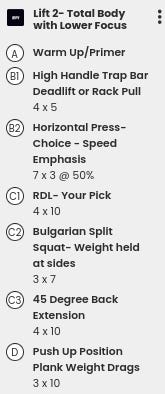
For example, from this sample session from our current phase if this was your bench press numbers, you could use 50% of 350 for your speed work or 175. No need to spend a week maxing on everything. You could even base this number off of your performance in week one on whatever horizontal press you did. Easy application, and you’ll be using numbers from your day to day readiness as opposed to that one time you just had a great day three years ago…meet yourself where you at. Look ahead for your long term planning. How strong do you want to be in year? What is a sensible way to measure that progress? I’d argue real time numbers and projected maxes.