
How to control your physiology so you can perform when others fail
Key Takeaway
Last article covered the autonomic nervous system and its effects on first‑responder and tactical performance. This piece shows how to apply that knowledge with aerobic conditioning circuits, visualization, and heart‑rate control as stress rises. This doesn’t replace realistic scenario‑based training - it complements it.
By training to control your heart rate and stress you will create habits in a controlled setting that transfer to realistic training and on‑the‑job performance.
Our Physiology
Quick Review From Last Article:
-
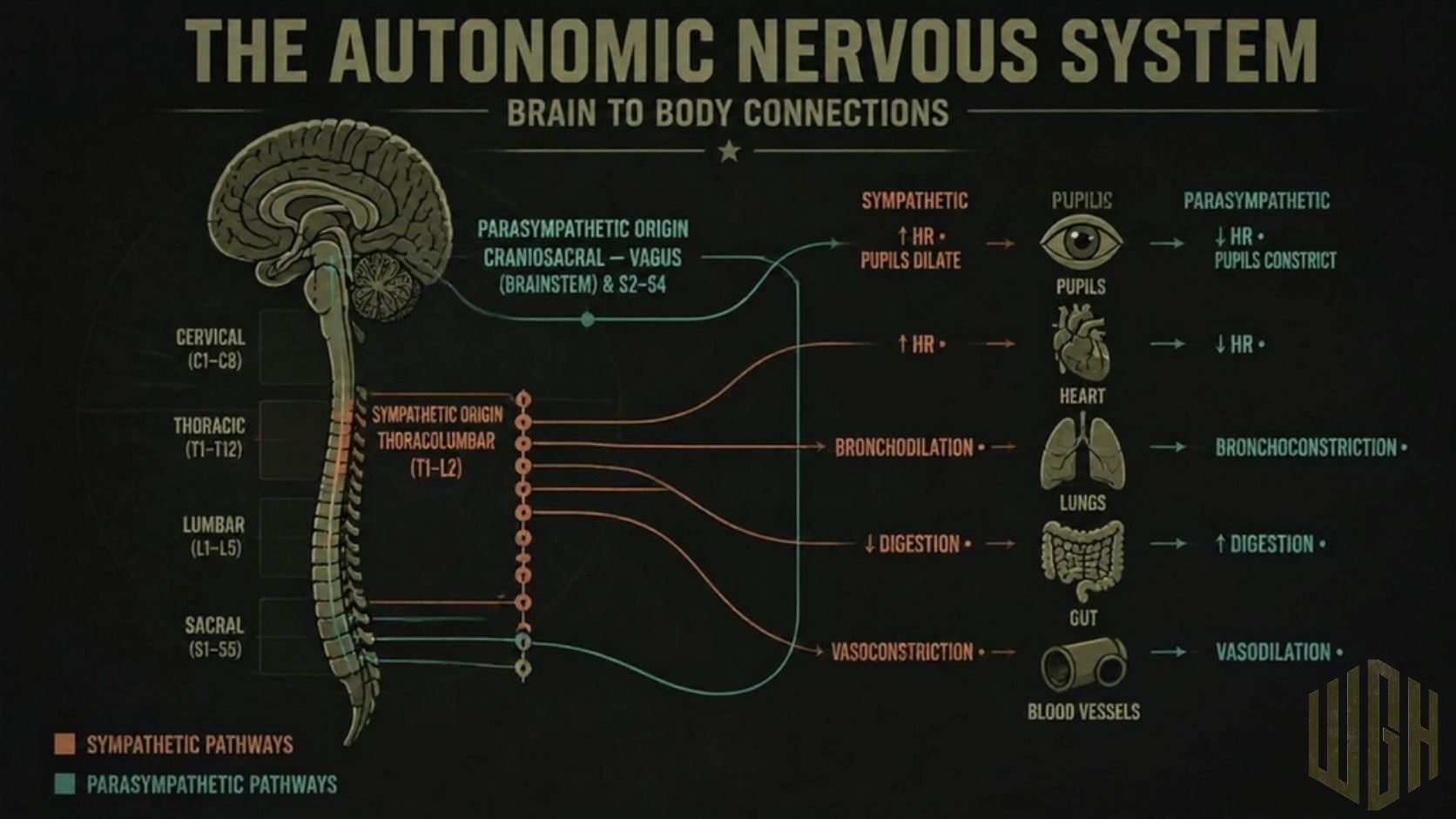
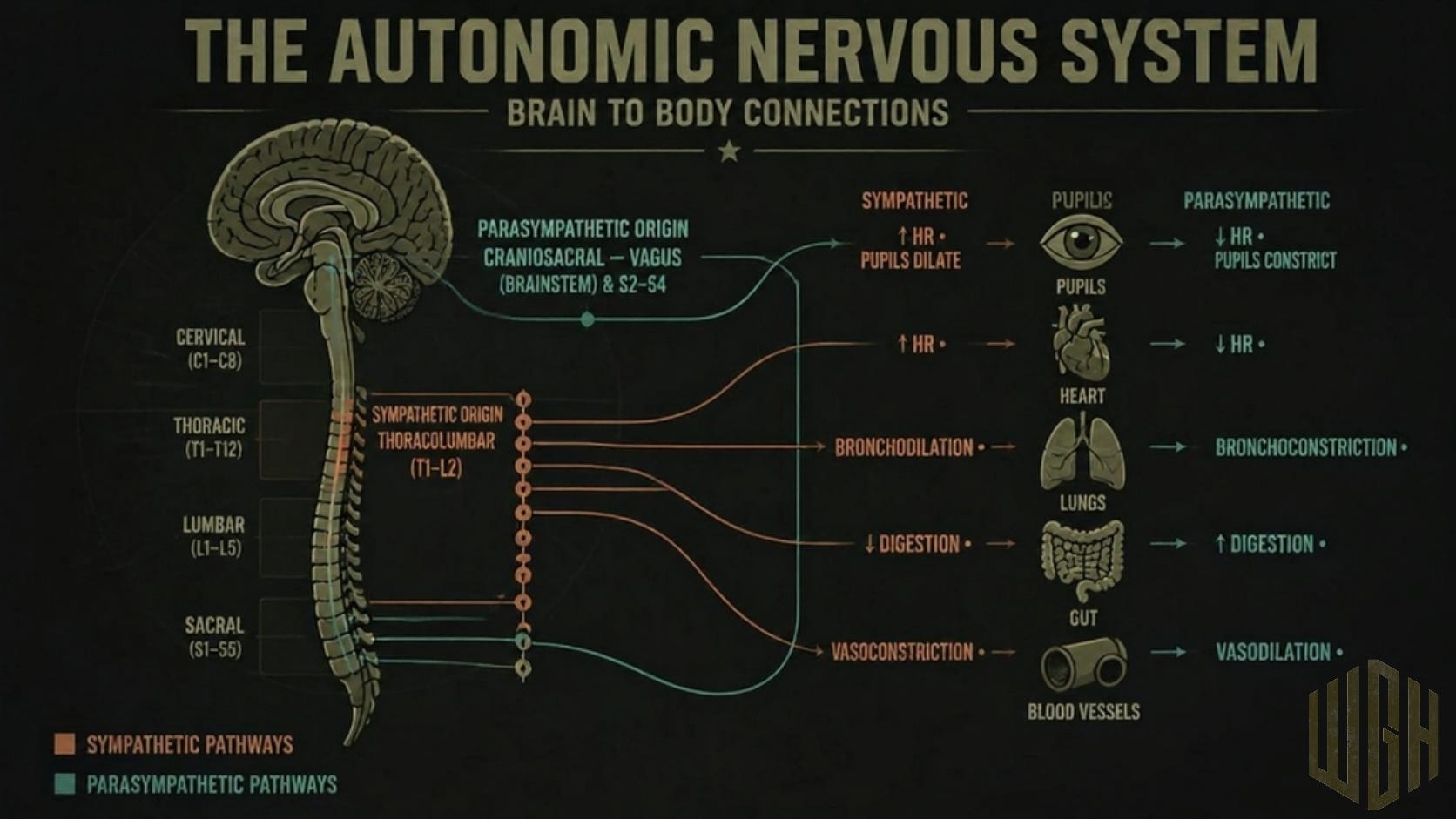
The diagram above shows the autonomic nervous system with its two modes: parasympathetic (rest-and-recover) and sympathetic (fight-or-flight).
-
View this as our automatic background processor that reacts to events without conscious input.
-
Automatic doesn’t mean immutable—like other human adaptations, it can be trained: either to be more prone to stress or more likely to stay calm under pressure.
-
Practical steps you can take (Lifestyle):
-
Monitor caffeine: track daily intake/reduce as needed.
-
Try non-stimulant pre-workout: for a few weeks lowers total daily caffeine intake to help reset the receptors caffeine acts on, restoring sensitivity
-
Get quality Sleep
-
This Article- Strength and Conditioning
In this article wee are going to focus on another critical aspect of this topic and that is to train optimally with a solid workout structure/schedule. As discussed in earlier articles, too many high-intensity days per week will lead to chronic fatigue. That isn’t toughness— it’s just stubbornness. I say this as someone who did it for years.
Let’s assume someone is doing quality scenario‑based training and completing the necessary tactical preparation for their profession. Obviously we’re not always on the range, much like an athlete isn’t always playing their sport. So where do we have other opportunities to practicing controlling our natural stress response? For me, strength and conditioning is an obvious answer.
In many training circles the focus is almost exclusively on “mental toughness” and getting crushed every session. If that’s all you do, you’re effectively teaching yourself to be stressed every time you train.
Intense, high end aerobic training or lactic‑burning conditioning has a place—VO2 max intervals and hard anaerobic work are valuable—but most of your training (about 80%) should target controlled, task‑specific aggression while striving to remain aerobic.
What does “stay aerobic” mean? Wear a heart‑rate monitor and push yourself at the hardest sustainable intensity that keeps you around 150–155 bpm. The more work you can do at this level, the longer you’ll sustain performance during SWAT or SOF selections and — more importantly — the less likely your default response on a real mission will be to red-line your heart rate and tunnel out.
Training Session Example
If you have experience in these professions, none of this should be surprising. Quality training doesn’t teach you to panic if bullets start flying, so why would you repeatedly induce that panic in the weight room? We’ve all heard someone lose it on the radio — they’re harder to understand and more likely to make poor decisions under stress.
How do we retrain those individuals? We tell them to calm down, breathe, focus, and slow down. We don’t tell them to panic harder. Now imagine doing a simple kettlebell circuit such as Dan John’s Humane Burpee:
-
15 KB swings
-
5 KB goblet squats
-
5 push‑ups
Then repeat, reducing squats and push‑ups each round:
-
15 swings, 4 goblet squats, 4 push‑ups
-
15 swings, 3 goblet squats, 3 push‑ups
-
15 swings, 2 goblet squats, 2 push‑ups
-
15 swings, 1 goblet squat, 1 push‑up
I like starting with 10 reps for the squats/push‑ups and working down to 1.
You can run this session two ways: blast through it and max your heart rate, finishing exhausted on the floor; or monitor your heart rate and slow or pause once it exceeds ~155 bpm. When it creeps up, practice slowing your breathing, refocusing on the task rather than the fatigue, and using positive visualization. Even better…visualize that foot pursuit or structure fire in your head. See yourself performing at your best.
Track how long it took you to complete this, and in the next session aim to maintain the same intensity while finishing faster — measurable progression that proves you improved work capacity and learned to control your fatigue.
Another way you could do this is test yourself one day and push as hard as you can. Then train for a few weeks learning to control your heart rate as described above. Crush the test again in a few weeks — I’ll almost guarantee you’ll complete the circuit faster despite not killing yourself each week or negatively impacting your other training sessions.
Closing
The benefits aren’t only mental. These sessions are easier to recover from, so you can train again sooner without impacting other important sessions like pure strength work or self defense. The key here is consistency and accumulating more work over time. This increase in volume will increase your work capacity: meaning you will build a larger physiological engine with a higher training ceiling. In short, you can do more, recover faster, and become stronger and more capable.
We use work‑capacity circuits like this across our General Human Performance Program, SWAT, and SOF selection prep plans because they work.
Don’t just work out. Train.